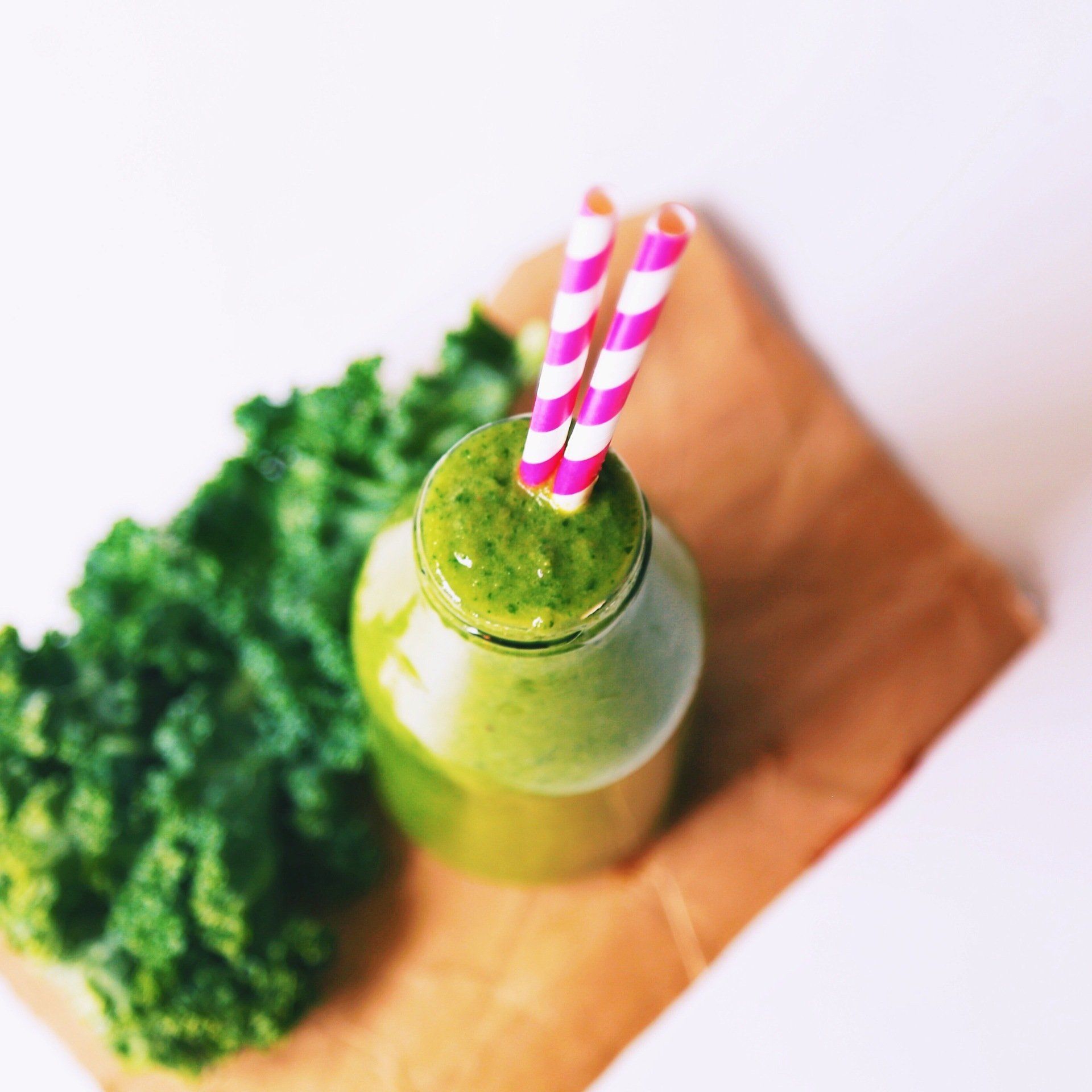
Banana and Pineapple Smoothie

Author name


 Ingredients


1 Banana

1 cup Pineapple chunks

1/2 tbsp Coconut Oil

1/2 Tbsp Spirulina

1/2 Tbsp Macca Powder

1 Tbsp Milled nuts and seeds

1 Handful chopped Kale

Plant based milk to desired amount

.


Smoothie Benefits


Pineapple: Pineapple not only tastes delicious but has a high nutrient profile and is a great option for giving your immune system a boost. It also contains an enzyme called bromelain that can aid digestion by helping to break down proteins into amino acids, this is why it is often used in a supplement form for people with poor digestion. Bromelain also has strong anti-inflammatory properties, hence pineapple juice is often recommended to soothe a sore throat. A smoothie is one of many ways to add pineapple into your diet, it can be added to salads, live yoghurt, fruit salads or even with cooked food such as homemade curry.

Spirulina: This blue-green algae is particularly high in iron and B12 as well as being a great source of protein (it contains all the essential  amino acids). The strong taste of Spirulina is  easily disguised in a smoothie and its a great way to support energy production in the body.

Macca powder: Also known as Peruvian ginseng is a real power boost for the mind and body. Traditionally it was used for increasing energy, fertility support and low libido, these health benefits are thought to be attributed to bioactive compounds called macamides. If I am feeling sluggish or lacking motivation I always add Macca to my smoothie in the morning. It is high in protein, iron and fibre and supports mood and cognition, for me (someone who doesn't drink coffee) it has a similar effect to caffeine in terms of sharpening the mind but without the overstimulation.


End Note:

Foods supports the body naturally, it is not medicine and should never be seen as a replacement for medications. If you are seeking to improve your diet and learn more about the therapeutic applications of herbs, foods and supplements please consult a qualified naturopath/ herbalist/ nutritionist. Please be aware of any allergies, this smoothie contains NUTS.
By Shelley Osborne-Shaw • September 1, 2025
Vitamin D 10 years ago, I discovered just how important vitamin D could be to our health when I was diagnosed with a deficiency. At the time, I was struggling with joint pain, extreme fatigue, low mood and bowel inflammation. As a natural healthcare practitioner, I had always tried to support my health through nutrition, herbs and complementary therapies. However, following the birth of my second child, my recovery wasn’t as straightforward as I had expected. Wanting to understand what was happening, I decided to have a thorough health MOT, working alongside both my naturopath and GP. One of the key findings was that my vitamin D levels were clinically deficient. Vitamin D plays an important role in calcium absorption, bone health, muscle function and immune system function. Research has also explored its relationship with mood and inflammation, although the links are complex and the evidence is still evolving. There is ongoing discussion about what constitutes an optimal vitamin D level, particularly between conventional and functional medicine. While some practitioners advocate higher target levels, there is no universally agreed optimal range for every individual. A result also needs to be interpreted in the context of the laboratory reference range, your symptoms and your overall health. If you are experiencing any of the below symptoms seek appropriate medical care but also consider checking your vitamin D levels. Persistent fatigue Muscle aches, weakness or pains Bone pain or tenderness Low mood Slow wound healing Vitamin D & your health Vitamin D is a fat-soluble vitamin that supports many vital functions in the body. Ideally, we obtain most of our vitamin D from sunlight, with smaller amounts from food. When UVB rays reach the skin, they trigger the production of cholecalciferol (vitamin D3), the precursor to the active form of vitamin D known as calcitriol. However, living in the northern hemisphere can make it difficult to produce enough vitamin D, particularly during the long, dark winter months when sunlight is insufficient. Our vitamin D production can also be influenced by how much time we spend outdoors, clothing and sunscreen use. How much sunlight do we need? The amount of sunlight needed to produce vitamin D varies depending on skin tone, time of year, time of day and how much skin is exposed. Fairer skin generally produces vitamin D more quickly, while darker skin contains more melanin, which reduces vitamin D production. In the UK, sunlight is generally insufficient for vitamin D production during autumn and winter. During spring and summer, short periods outdoors may help maintain vitamin D levels, but there is no single exposure time that works for everyone and it can be a fine line between exposing your skin to sunlight and protecting it at the same time. Why is Vitamin D important? Vitamin D plays a vital role in many processes throughout the body. Vitamin D receptors are found in numerous tissues, and the vitamin influences the activity of genes involved in a wide range of biological functions. Bone health: Vitamin D helps the body absorb calcium from the intestines, supporting healthy bones, teeth and normal bone mineralisation. Immune function: Vitamin D helps regulate immune responses, including the activity of immune cells and the production of antimicrobial substances that help defend the body against infection. Gut health: Vitamin D helps maintain the intestinal barrier and influences immune activity in the gut. Research into its relationship with the gut microbiome is ongoing. Brain health and mood: Vitamin D receptors are found in areas of the brain involved in mood regulation. Low vitamin D levels have been associated with depression and fatigue, although this does not necessarily mean deficiency is the cause, it may indicate that maintaining adequate vitamin D levels form a wider part of the picture when supporting overall health and wellbeing.
By Shelley Osborne-Shaw • September 27, 2024
Find out what antioxidants are and why they are important.
By Shelley Osborne-shaw • February 6, 2024
Kick start your morning with this energising smoothie!